Posted on Leave a comment

Best Base Layers for walking, hiking, running, cycling

Hiking base layers

Best Base Layers for Hiking, Walking, Running & Cycling [Ultimate Guide]

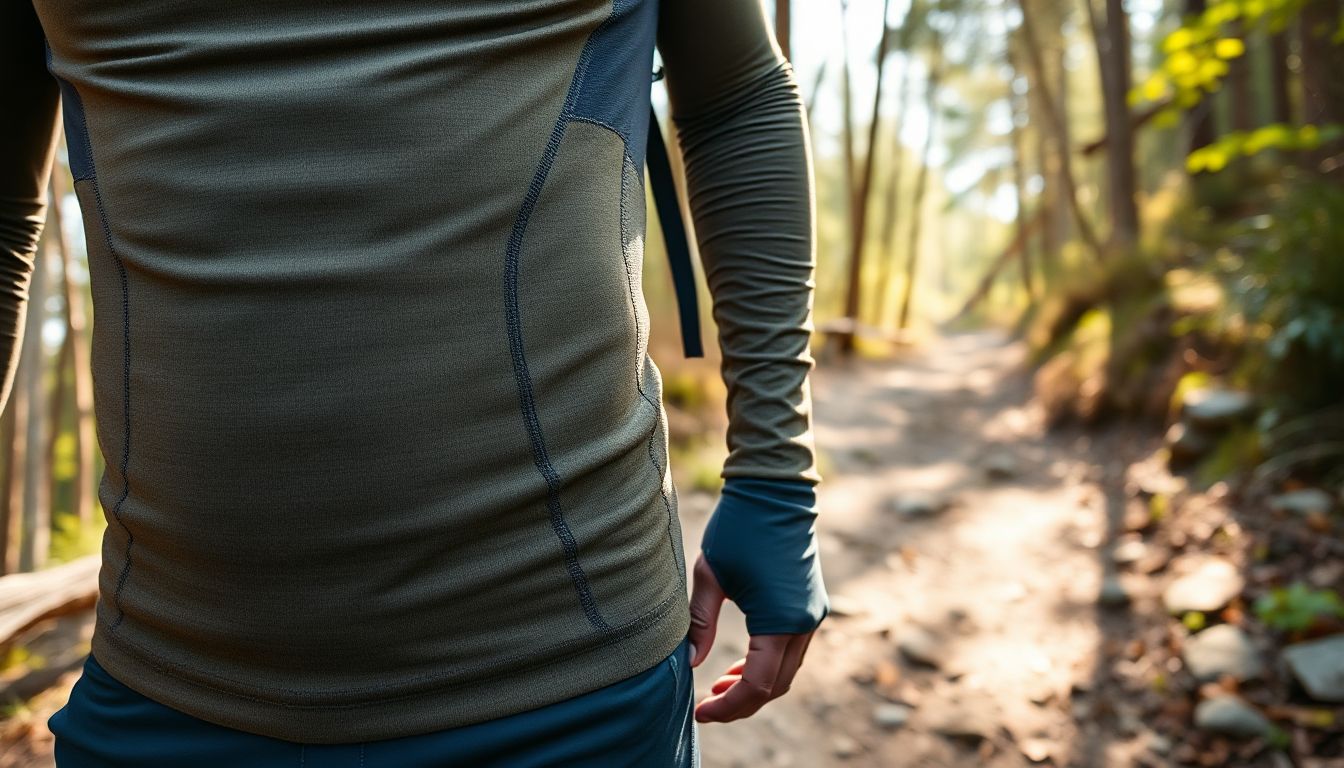
When you’re hiking, walking, running, or cycling, your base layer—the layer worn next to your skin—plays a crucial role in regulating your body temperature and keeping you comfortable.

What Is a Base Layer and Why Does It Matter?

A base layer is your first layer of clothing, sitting directly against your skin. Its key roles include:

  • Insulating your body by trapping warm air.

  • Wicking sweat away to keep you dry.

  • Regulating temperature, whether it’s hot or cold.

.

Types of Base Layer Fabrics

1. Merino Wool Base Layers

  • Natural, breathable, and soft.

  • Excellent thermal insulation and moisture-wicking.

  • Odour-resistant — great for multi-day trips.

  • Ideal for cold weather hiking, winter runs, or alpine cycling.

2. Synthetic Base Layers (Polyester/Nylon)

  • Lightweight and fast-drying.

  • Excellent at managing heavy sweat.

  • More affordable, but may retain odour.

  • Perfect for high-intensity activities like running or cycling.

3. Blended Fabrics

  • Combine the benefits of wool and synthetics.

  • Good balance of comfort, durability, and performance.

No products found.

Base Layer Weight Guide

  • Lightweight – Best for summer hiking, running, or indoor cycling.

  • Midweight – Ideal for cooler weather, spring/fall hikes.

  • Expedition-weight – Designed for freezing conditions, snow trekking, or alpine sports.

Key Features to Look for in Base Layers

✔ Moisture-Wicking & Quick-Drying

Stay dry during intense workouts or long hikes. Quick-dry layers prevent discomfort and chills.

✔ Thermal Regulation

Choose materials that retain heat in the cold and release heat when you’re sweating.

✔ Odour Control

For multi-day trips, opt for anti-microbial fabrics like merino wool or treated synthetics.

✔ Comfort & Fit

A good base layer should be form-fitting without being restrictive. Look for flatlock seams or seamless construction to avoid chafing.

✔ Sustainability

Eco-conscious adventurers should choose ethically sourced merino wool or recycled synthetic materials with certifications like OEKO-TEX or GOTS.


Top Base Layers for Different Activities

Best Base Layers for Hiking

  • Merino or blended fabrics.

  • Midweight or lightweight depending on season.

  • Example Brands: Icebreaker, Smartwool, Ortovox.

Best Base Layers for Running

  • Lightweight synthetic fabrics.

  • High breathability and sweat management.

  • Example Brands: Under Armour, Nike Pro, Patagonia Capilene.

Best Base Layers for Cycling

  • Lightweight to midweight synthetics or blends.

  • Slim fit for layering under bibs or jerseys.

  • Example Brands: Castelli, Rapha, Pearl Izumi.

Best Base Layers for Walking

  • Lightweight merino or polyester.

  • Comfort and ease of movement are key.

  • Example Brands: Helly Hansen, BAM Bamboo Clothing.

No products found.

How to Care for Your Base Layers

  • Wash merino wool in cold water, avoid fabric softeners.

  • Synthetics can handle warm water but use mild detergent.

  • Air dry or tumble dry low to prevent shrinkage.

  • Store flat and clean to maintain fabric integrity.


When to Replace Your Base Layers

Replace your base layer if:

  • It no longer wicks moisture effectively.

  • The fabric is worn thin or pilling.

  • There’s persistent odour retention.


Real-World Use Cases

  • Arctic explorers swear by merino wool for warmth and odour control.

  • Trail runners prefer lightweight synthetics for sweat management.

  • Cyclists love blended fabrics that layer well under jerseys.


Expert Tips for Buying the Best Base Layers

  • Match fabric weight to your climate.

  • Test layers on short outings before committing to long treks.

  • Invest in quality over quantity—performance matters.

  • Choose multi-season versatility for year-round use.


Conclusion: Your Ideal Base Layer Awaits

Whether you’re scaling a mountain, jogging city trails, or cycling country roads, choosing the right base layer is a game-changer. Consider materials like merino wool, synthetic blends, and the appropriate weight and fit for your activity and climate. A high-quality base layer keeps you warm, dry, and odour-free, helping you perform your best in any condition.

No products found.


Posted on Leave a comment

Best head torches: headlamps for running, hiking, camping and fishing

Head Torches, head lights are just one of the essential items you should always take with you when going out hiking.

You just never know what might happen, you could quite easily get lost or disorientated so get delayed for sometime before you get back on track, but this could mean you find yourself walking in the dark over hilly, unfamiliar and uneven terrain. You might even get injured and unable to complete your walk, by having a torch or light it would make it easier to attract attention of other hikers or rescuers.

Headlights and torches are very light weight and compact, are available at prices to suit every pocket so there’s no reason why you shouldn’t always take one with you. I would also be advisable to carry replacement batteries with you just in case!

Here are a few examples of the types of head torches available at varying prices.

Petzl Duo S Headlamp

[amazon_link asins=’B07D44TBWC’ template=’ProductCarousel’ store=’thebootboutiq-21′ marketplace=’UK’ link_id=’ba466e4c-ce13-45a1-9bc3-c8415d240f4e’]

Silva Headlamp Trail Runner 4 Ultra

[amazon_link asins=’B07J5PL99X’ template=’ProductCarousel’ store=’thebootboutiq-21′ marketplace=’UK’ link_id=’4ff841c3-7024-4ce0-926f-4890afcfcb7a’]

Exposure Verso Mk2 Head Torch

[amazon_link asins=’B082DGR317′ template=’ProductCarousel’ store=’thebootboutiq-21′ marketplace=’UK’ link_id=’99009801-cbf7-414d-8ef3-598de594a7a2′]

Petzl Tikkina

[amazon_link asins=’B01KYTU6BO’ template=’ProductCarousel’ store=’thebootboutiq-21′ marketplace=’UK’ link_id=’6d52f74c-501b-4734-9ec7-b853df20af12′]

Coleman BatteryGuard Headlamp

[amazon_link asins=’B07KYGS8YN’ template=’ProductCarousel’ store=’thebootboutiq-21′ marketplace=’UK’ link_id=’3cebc0f7-5fc4-4725-aa65-6126c3ff4d02′]

LED Lenser Neo LED Head Torch

[amazon_link asins=’B00MUTSCPO’ template=’ProductCarousel’ store=’thebootboutiq-21′ marketplace=’UK’ link_id=’b45f2f91-06ff-4fa0-8441-5c41a23918eb’]

Also please read the article below which will give you a more in-depth review on a selection of head torches.

When it comes to exercising or adventuring outdoors, there are many pieces of kit you’ll need to invest in, including the best head torch for your chosen activity. Head torches, also known as headlamps, are ideal for running, for use during night fishing, and for finding your way around a dark cave.Best head torches 2020: headlamps for running, hiking, camping and fishing

Headlamps are a godsend for camping too, as you can use one to illuminate your way to the toilet block at 3am. You don’t even have to wear it on your head – just carry it. Headlamps are also an essential bit of outdoors gear for caving and mountaineering, helping you to see your surroundings clearly, even if it’s pitch black.

View origin article

Best head torches 2020: headlamps for running, hiking, camping and fishing


Posted on Leave a comment

Lost hikers highlight need for preparation

Chief Frankie Baker and other members of the Norfork Volunteer Fire Department spent several hours recently looking for a pair of lost hikers. Baker has tips for those who are contemplating a hike.

A brief story of a group of hikers who set out totally unprepared for their hike. Just a few simple measures and preparation could keep you safe and well.

At approximately 4:45 p.m. on that day, Baker’s department was paged out for a pair of lost hikers, just 22 minutes prior to sunset. Dispatchers told Baker the couple and their two dogs had been hiking approximately 30 minutes when they found themselves off the trail and lost.

To make matters worse, either their cell phone signal was weak or their phone battery was dying. Additionally, their flashlight batteries had died, leaving them with no way to visually signal rescuers.

Chief Frankie Baker and other members of the Norfork Volunteer Fire Department spent several hours recently looking for a pair of lost hikers. Baker has tips for those who are contemplating a hike. (Photo: Josh Dooley/The Baxter Bulletin) NORFORK — A day hike nearly turned disastrous for a couple […]

View original source https://eu.baxterbulletin.com/story/news/local/2020/01/10/lost-hikers-highlight-need-preparation/2846148001/

Posted on Leave a comment

Winter Hiking Advice (for People Who Don’t Go Winter Hiking)

Winter Hiking Advice.

Always remember a few simple rules when going on a hike to stay safe. It’s better to be prepared by having the correct equipment and brightly coloured clothing. Try to avoid hiking in the dark but if you do, remember to take a flashlight or headlamp. Always tell someone where you are planning to walk and some idea of the time you expect to return just in case you get lost or come into difficulty. At least then they will be able to raise the alarm and know where to start searching for you.

I thought it would be a good idea to do a winter hike during a big snowfall. I imagined it would be quiet, sparkling, mesmerizing. And it was quiet – but also dark and gray and creepy.Winter Hiking Advice (for People Who Don’t Go Winter Hiking)

The first mistake I made was not planning ahead. I had intended to do a snowy hike after the Thanksgiving blizzard we received, but then I neglected to pick a spot until another one was already in full force.

I chose to go to White Cliff Nature Preserve, or White Cliff Fen, in Egg Harbor. I had never been there before and was excited to try something new. I followed my GPS to Harbor Heights Road, an unplowed road leading down into the trees.

Snow-covered trees lined Harbor Heights Road in Egg Harbor. Photo by Celeste Benzschawel. I thought it would be a good idea to do a winter hike during a big snowfall. I imagined it would be quiet, sparkling, mesmerizing. And it was quiet – but also dark and gray and […]

View Original Article at https://doorcountypulse.com/winter-hiking-advice-for-people-who-dont-go-winter-hiking/

Posted on Leave a comment

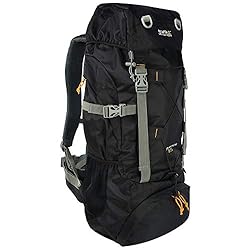
Regatta Survivor III 85 Litre Rucksack Hiking Backpack Trekking

Regatta’s spacious Survivor III expedition rucksack with up to 85-litre capacity.

A durable and well-organised backpack for camping trips and travelling. Made from tough-wearing ripstop fabric with a mesh construction that allows air to flow between the bag and your back.

Weight is carefully distributed and stabilised with an internal metal frame and adjustable chest and hip belt. On the side, you’ll find two conveniently placed zipped pockets plus mesh water bottle pockets and bungee walking pole holders. The detachable rain cover increases weather resistance.

Hardwearing 600D polyester ripstop; Zipped lid pocket. Air mesh back construction to allow ventilated airflow; Air mesh adjustable hip belt to help stabilise pack weight;

Air mesh adjustable shoulder straps. Adjustable sliding chest harness; Side compression straps; Front bungee storage system.

Integral bungee walking pole holders; 2 zipped side pockets;

Side mesh water bottle pockets

Internal key clip; Easy grab zip pullers; Lower zipped storage compartment with internal drawcord divider
Detachable raincover.


Posted on Leave a comment

Buying the right hiking boots | Boot Guide

Hiking/Walking Boots Buying & Fitting Guide

Buying the right hiking boots. Choosing your boots is probably one of the most important decisions you’ll make. Choose the right boots and your feet will thank you and if the boots are looked after they will last for many years.

In order to avoid the soreness and pain of foot blisters and aches when you are on a long hike, it is vital to put some forethought into buying superior and first-rate walking or hiking boots.

Choosing boots based on style or looks is not the most efficient way to make sure proper support. As a matter of fact, the process can require more trial and error than you may think. When it comes to hiking, having the right equipment, which includes your boots is vital.

Your new walking/hiking boots are one of the essential items you can purchase for hiking. Pick your boots/shoes with extra care, make sure they fit you appropriately, look after them properly and you will have a memorable hiking/walking experience.

This guide is intended to provide you sound advice on everything you might want to know to make the right purchase.

You will find a wide selection of boots for men, women and children from leading manufactures, offering great quality and prices to suit everyone. To see more hiking boots and also casual, dress and work boots visit the bootboutique.

Choosing Walking/Hiking Boots Based on your Activity

Perhaps the best way to pick the kind of walking/hiking boots you want is to do base on the type of activity you will be doing.

• Light Walking Boots
If you enjoy light walking, it doesn’t matter if that is walking with your pet or simply going for stroll or rambling, then a more flexible boot is the best option. You might even find that walking shoes are perfect if you are not planning on carrying out anything strenuous. [amazon_link asins=’B07JPWX9FY’ template=’ProductCarousel’ store=’thebootboutiq-21′ marketplace=’UK’ link_id=’67ed6374-836d-4a87-a400-9d9dfa4c9b56′]

• Backpacking Boots
These are made to carry loads of varying weights on multiday journeys. They are supportive and durable with firmer midsoles than lighter shoes. [amazon_link asins=’B01M293H4Z,B074KLNZPN,B07KMC2Y16,B07P63MY9V,B002IIEA7G’ template=’ProductCarousel’ store=’thebootboutiq-21′ marketplace=’UK’ link_id=’1ad86651-c786-4dd3-adef-f83ea0e368f0′]

• Mountaineering and Hill Walking Boots
If you are serious about walking, and you are going to be climbing hills and mountains, or over uneven terrain, then you are going to need a sturdy boot. You will need boots with the rigid sole to avoid the boots from bending too much, and a stronger upper to help support your ankles and feet.
Extra features you must also consider are things like if your preference is towards high cut, medium cut or low cut hiking boots? Is there enough cushioning provided for the kind of hike you are planning? These are additional factors you must keep in mind. [amazon_link asins=’B078YWGTRV’ template=’ProductCarousel’ store=’thebootboutiq-21′ marketplace=’UK’ link_id=’38baff97-2128-44c0-bd3b-2d8628f5bb58′]

For outdoor enthusiasts who want stronger and sturdier footwear than their regular climbing shoes when walking and maneuvering around the cliff, it is highly advisable to invest in a pair of approach shoes. This type of show is somewhere between climbing shoes and hiking boots. This type of footwear provides support and lots of flexibility as well as mobility over the faintly more dangerous terrain.

What to Look for in Hiking Boots/Shoes

Water-resistant
There are ways to make boots water resistant, one by using an extraordinary membrane and utilizing seam sealing. These two are practical and have their benefits. Branded layers are likely to be assured and last longer while those with seam sealing are usually a little bit cheaper but more breathable.

Mesh and Leather Uppers
The leather is considered the finest materials for comfort, durability as well as waterproofing, whilst mesh panels boost the breathability of boots, which make them more comfortable. There are 3 kinds of leather available, and what is ideal for you depends on an individual or personal taste; suede leather which is rugged looking, nubuck a velvety feel and look as well as full-grain leather which is a little bit glossy and smooth.

Internal Support
There are two facets to the internal support of most walking boots that you should keep a note of. The first is shanks. These are 3to 5mm-thick inserts that are sandwiched between a boot’s midsole and outsole to add load-bearing stiffness to the midsole. Varying in length, some shanks cover the entire length of the midsole, while others only cover half.

The second internal support facet is the plates. These are thin, semi-flexible inserts that are positioned between the midsole and the outsole, and below the shank. Their primary job is to protect feet from getting bruised uneven ground underfoot such as tree roots or rocks. Any decent walking boots should comprise both these features.

Other consideration
Most decent hiking boots on the market are waterproof, and use treatments like Gore-Tex – a waterproof breathable membrane or an own-brand waterproofing system to fend off rain. Make sure the boots you buy are listed as fully waterproof and not just water resistant – the latter can deal with a light shower but is pretty much useless in bad weather.

Hiking boots are generally designed with rugged rubber soles, some use specific technology, Vibram – designed to provide excellent traction on the widest range of surface is the last word in toughness. Look for bouncy soles with deep lugs – these offer good grip. If in doubt, boots packing both Gore-Tex and Vibram tech are bound to be pretty decent and will make a good investment

Lacing Systems
Your dream walking boost must have solid, lightweight as well as durable lacing hardware. This is likely to come from rust-resistant metal or specialist plastic. However, either way, will let you make adjustment throughout your trip. Your feet are likely to swell as well as get bigger towards the end of a trail, so with secure adjusting hardware, you can modify the fit.

Comfort Fit
To determine if the boots are right for you, you have to try them first. Tie them up firm and bring a medium weight sock to give you a good idea of how they fit. Search for removable insoles that allow for a good fit as well as lining materials which wick moisture away from your foot.

Size
A hiking boot must fit snug everywhere, firm everywhere and provide space to jiggle your toes. Try them on (after feet swell) and with the socks. Know the size of your boot. It is best to have your foot’s width, length, as well as arch length measured, this may seem obvious. but feet do change size over time, so if you haven’t had yours measured for some time, it’s not a bad idea to get them measured especially before you order boots or shoes online.
Guide in Fitting Your New Walking/Hiking Boots

• Buying a pair of walking/hiking boots is a good investment, but they will be next to of no use if they do not fit properly. Here are the tips on how to ensure your new hiking boots fit well.

• Feet swell a little as the day goes on, so keep in mind you are trying new boots/shoes on. You may even need to consider the time of the year because feet swell more in the hot season.

• Buying the right hiking boots, It is essential to wear your preferred walking/ hiking socks when trying new boots. If you ignore this, you will not get a real feel of how the boots fit and how they will feel if you are out hiking or walking.

• Ensure to leave enough space at the end of your boot. This is vital with hiking boots when climbing hills and mountains your feet will need space to move, it depends on the position of your feet. A finger’s width is a respectable amount of space to leave, and if you are not sure on how much space there is, remove the insole, and try it against your feet.

• If the boots are not laced up well, then you will not get a precise feel for how the boots fit. Ensure the tongue is inner and tightly lace the boots up, utilizing the eyelets. But, you need to be extra careful not to lace them too firmly, or they will be painful and rough.

Conclusion

Many people have taken up walking and hiking as a way to enjoy the great outdoors, but also to include some soothing stress-free time. However, to enjoy this activity, one should be dressed suitably and have the right hiking or walking gear like boots.

Whatever kind of outdoor walking you are planning, whether it be a simple stroll in the countryside or walking through more challenging environments with rugged terrain, you should consider investing in a good pair of walking/hiking boots or shoes.

There are some great walking boots on the market both durable and waterproof designed specifically to deal with the elements, keeping your feet dry and comfortable and free from blisters. A good pair of hiking boots doesn’t come cheap but the investment is well worth it and if looked after will give you years of comfort and pleasure.