The unmarked, but well worn trail is easy to follow and relatively bog-free by Lofoten standards. That means it takes 20 minutes before your shoes are soaked rather than the usual 10 minutes.
I found a possible campsite close to the trailhead parking lot — then hid my gear in a waterproof bag in the trees.
What I liked about Holandsmelen, relative to other Lofoten peaks, is that the going is not an unrelenting climb. There are flat sections on this half dayhike.
As usual, the views from the top are Lofoten breathtaking.
Looking over to Leknes
Here’s my favourite photo from the hike. I believe these tiny berries are edible.
In March 2022 I solo hiked for 8-days in the Drakensberg mountains on the border of South Africa and Lesotho.
My route started in Cathedral Peak in uKhahlamba-Drakensberg Park in the KwaZulu-Natal province of South Africa.
I hiked up to the escarpment via Organ Pipes Pass where I headed north towards the Mnweni area. I got down the escarpment via Rockeries Pass for resupplies and back up (bushwacking) via Fangs Pass.
North at the top of Tugela Falls in the Amphitheater of Royal Natal National Park I met up with my dad to spend one last night up the escarpment.
We got down via the infamous Sentinel Ladder.
Favorite hike in the world. The weather, terrain, views, people and remoteness make this hike really unique. Also the most challenging hike to date.
An excellent book. Even if you have no interest in hiking or pipelines.
In fact, you won’t learn much about hiking. A thru hiker would not be impressed. Ken’s gear was too heavy. And he hiked the wrong months of the year.
Ken Ilgunas has a Masters in English from Duke. He’s a terrific writer.
This book has given me the best insight into how poor North American rural people think. An insight into why they vote for political Parties that make the rich richer, the poor poorer. Worse education and health care.
Children and grandchildren leave for big cities. Life is tough for those remaining.
Ken mostly sought out small town religious leaders, asking them for advice on where he could tent safely. He was astonished by the generosity of those spiritual leaders.
Ken worked as a backcountry ranger in Alaska. And was forced to take a job as dishwasher in a high Arctic oil camp.
Jobs there were high pay — very low quality of life.
Those arguing for the Petrotoxin industries usually shout JOBS, JOBS, JOBS. Ken came away thinking these were actually lousy jobs. High rates of alcoholism and drug abuse.
In September 2012, I stuck out my thumb in Denver, Colorado, and hitchhiked 1,500 miles north to the Alberta tar sands. After being duly appalled, I commenced my 1,700-mile hike south following the route of the proposed Keystone XL pipeline, from Alberta to the Texas Gulf Coast. It would become a 4.5 month journey across the Great Plains. To follow the pipe, I couldn’t take roads. I’d have to walk across fields, grasslands, and private property. I’d have to trespass across America.
The book is about my journey–fleeing from cows, taking cover from gunfire, and keeping warm on a very wintry and questionably-timed hike. But it’s also about coming to terms with climate change and figuring out what our role as individuals should be in confronting something so big and so out of our hands. It’s about taking a few months of your life to look at your country from a new perspective. Ultimately, it’s about embracing the belief that a life lived not half wild is a life only half lived.
Most of the folks he met were supportive of Keystone XL Phase IV— but over the months Ken didn’t come away with even one good argument in support of the project.
Few jobs. Short term jobs. MOST of the money kept by the corporation, not those people who had dirty oil flowing over their property.
Most of the dirty Canadian oil is shipped overseas.
There are plenty of pipelines in North America. If you must ship Petrotoxins, pipelines are likely the least terrible way.
But Keystone XL became symbolic of the debate over how to slow or reverse climate change.
Brian Robeson is a thirteen-year-old son of divorced parents. As he travels from Hampton, New York on a single-engine Cessna bush plane to visit his father in the oil fields in Northern Canada for the summer, the pilot suffers a massive heart attack and dies.
Brian tries to land the plane but ends up crash-landing into a lake in the forest.
He must learn to survive on his own with nothing but his hatchet—a gift his mother gave him shortly before his plane departed.
… He discovers how to make fire with the hatchet and eats whatever food he can find, such as rabbits, birds, turtle eggs, fish, berries, and fruit. …
Over time, Brian develops his survival skills and becomes a fine woodsman. …
I enjoyed the short book. But it’s far from realistic. The Alone (TV series) documented just how difficult it is to survive on the much easier west coast of Vancouver Island.
Many readers asked the author WHAT would have happened to this teenager if he had to try to survive the Canadian winter. Brian was rescued by floatplane in The Hatchet.
So — in 1996 — Paulson published what would have been a sequel IF Brian had not found the emergency beacon.
… still stranded at the L-shaped lake during the fall and winter, constructing a winter shelter, building snow shoes, being confronted by a bear, befriending and naming a skunk and learning how to make a bow more powerful. …
There are more books in this series. I’ll read those as well as I’ve grown to wonder how Brian adapts to civilization.
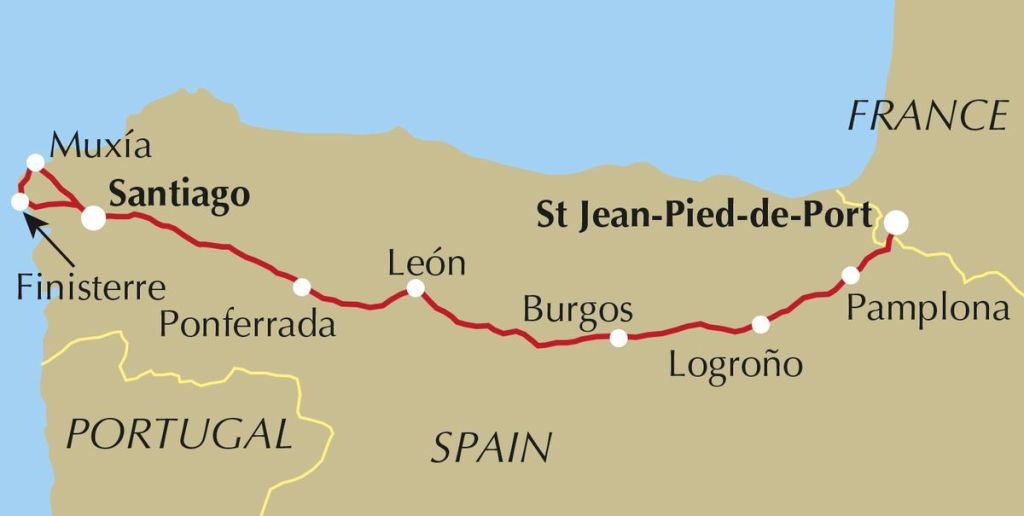
As with most hikes that can be cycled, I prefer to cycle. At least 10% of pilgrims cycle rather than walk or arrive on horseback. They are known as ‘bicigrinos’ or ‘bicigrinas’, bike pilgrims.
My PLAN is to ride León to the famous cathedral. About 325km. Perhaps a week. No rush.
The total length starting in France is 825km.
You need to cycle at least 200km in order to receive a Compostela certificate in Santiago (as opposed to minimum 100km walking).
Nearly 350,000 Compostela pilgrim certificates were issued in 2019. I won’t be lonely.
The Camino Francés, or French Way, is by far the most popular of many routes. Roughly 60% of pilgrims choose this camino over other options.
Though no guidebook is needed, I picked up a paper copy of Mike Wells’ Cycling the Camino de Santiago (2019). I’d listened to a good interview with the author.
While many tourists stick to the historic centre, the best walking is on a long green space to a complex designed by local architect Santiago Calatrava — the futuristic City of Arts and Sciences(Ciutat de les Arts i les Ciències), which contains an opera house/performing arts centre, a science museum, an IMAX cinema/planetarium, an oceanographic park and other structures such as a long covered walkway and restaurants.
It’s impressive.
Cityscape of Valencia. Turia park. Aerial view
Usually called Turia Garden, the park is officially 9km long. But expect your mileage to be quite a bit longer. I was on it at least 5 hours with side trips.
To start, I caught the subway to the Zoo on the far left of this map.
Lush forests, rugged shorelines, river crossings, waterfalls and fragrant fynbos make this adventure at the southern tip of Africa unique. It’s strenuous, with lots of ups and downs …
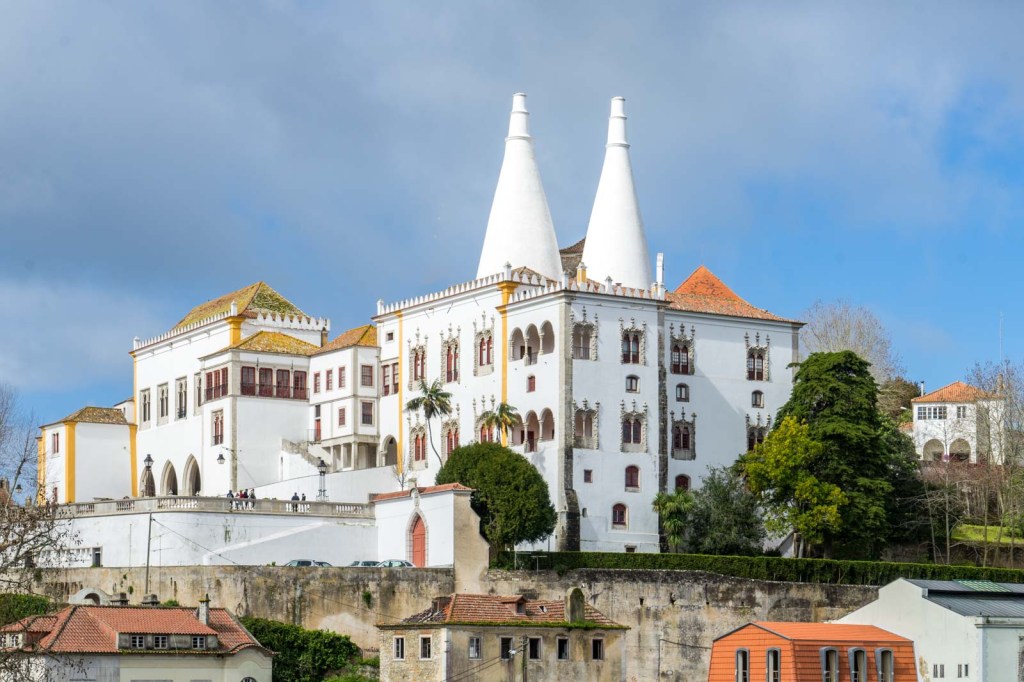
The historic center of the Vila de Sintra is famous for its 19th-century Romanticist architecture which resulted in the classification of the town as a UNESCOWorld Heritage Site.
I stood in line for almost an hour to wander the Palace like every other tourist. But wished I’d spent that time — instead — hiking the lovely trails over 200 hectares of surround Pena Park. It’s a labyrinth and I was lost most of the time despite trying to follow a route on AllTrails.
After escaping the Palace, I continued up towards a high crucifix.
Hikerstore.co.uk is a participant in the Amazon Services LLC Associates Program, an affiliate advertising program designed to provide a means for sites to earn advertising fees by advertising and linking to Amazon.co.uk.
“As an Amazon Associate, I earn from qualifying purchases, at no extra cost to you”












 100vw, 675px”></a><figcaption>River crossings are a challenge.</figcaption></figure>
<p>Click PLAY or watch a<a rel=) 1 minute preview
1 minute preview