Contents
Table of Contents
How to Make Walking Fun for Kids: Easy Games and Smart Tips
Last Saturday, our after-dinner walk started with groans. Shoes dragged, shoulders slumped, and the sidewalk felt like a chore. Then we tried a simple colour hunt, spot five red things before the next corner. Energy shifted, kids laughed, and the block felt new.
That quick switch matters. Kids stick with walking when it feels like play, not work. Fun walks build healthy habits, spark curiosity, and give families time to talk without screens. A little structure, like rules or roles, keeps feet moving and minds busy.
In this guide, you’ll learn easy walking games that work on any street or trail. We’ll share a simple nature scavenger hunt, kid-friendly challenges, and ways to turn landmarks into checkpoints. You’ll also see how to use music, stories, and photo prompts to pace the walk.
Parents want more than steps, they want connection. Short wins, like choosing the route or leading the count, give kids control and pride. Clear goals, light rewards, and playful tasks keep motivation high, even on tired days.
You don’t need special gear or hours to make this stick. You need a plan that fits real life, with ideas you can use today. Let’s turn routine walks into something your kids ask for, not avoid. The next block might be the best part of your day.
No products found.
Turn Ordinary Walks into Exciting Games
A little structure turns a simple stroll into play. Pick one of these crowd-pleasers, set clear rules, and watch energy rise. Each game scales for mixed ages and works on sidewalks, parks, or trails.
Launch a Scavenger Hunt Adventure
Make a short, visual list that kids can scan while walking. Think five to ten items: a red leaf, smooth rock, Y-shaped stick, feather, pinecone, mailbox flag, a dog on a leash.
- How to set it up: write items on an index card, or print a one-page list with small icons for non-readers. Add a simple rule like first to five, or team play where everyone must find at least one item.
- Clear rules keep pace: kids look ahead, not down at their feet. They move with purpose, call out discoveries, and push to reach the next item.
- Quick wins: include easy targets to spark momentum, then sprinkle one or two rare finds for a fun challenge.
Apps and printables that fit 2025 habits:
- Try PlayTours, GooseChase, or Actionbound to build simple hunts with photos and short clues. These handle teams, timers, and quick scorekeeping.
- For low-tech days, use printable sheets. Keep a few themes ready, like fall leaves or city signs.
- Photo hunts for younger kids: Monkey Spot Scavenger Hunts or PBS Kids’ Plum’s Photo Hunt. Older kids enjoy Scavify or Let’s Roam for photo and GPS tasks.
Age tweaks:
- Toddlers: use pictures only, and count finds together.
- Early readers: add colour or shape hints.
- Big kids: add timed rounds, riddles, or bonus points for creative photos.
Play I Spy to Sharpen Young Eyes
This classic works anywhere and needs zero prep. One player picks an object in sight and says, “I spy with my little eye, something…” then gives a hint.
Basic ways to play:
- Colours: “something green” like a street sign or leaf.
- Shapes: “something round” like a wheel or manhole cover.
- Letters: “starts with B,” great for older kids.
- Sound twist: “something that buzzes” or “something that beeps.”
Why it helps: kids scan the environment, compare details, and hold clues in mind. That builds focus and vocabulary without stopping the walk.
Safety on busy paths:
- Set a rule to stay on the right and keep moving while guessing.
- The “spy” must choose items ahead, not behind.
- If a street crossing comes up, pause the round and restart after.
Age tweaks:
- Younger kids get two hints per turn.
- Older kids limit guesses, or set a 30-second timer.
No products found.
Follow the Leader for Active Fun
Rotate leaders every block or minute. The leader sets a simple movement to copy while walking.
Ideas that get giggles:
- Silly walks: high knees, heel-to-toe, tiny steps, giant steps.
- Hops and skips: hop three times, skip to the tree, sidestep five paces.
- Balance moves: walk the curb line, tiptoe for ten steps, airplane arms.
Physical perks and bonding:
- Short bursts raise heart rate and coordination.
- Kids take turns leading, which builds confidence and group rhythm.
- Calls like “freeze,” “slow,” or “fast” keep the group synced.
Fun themes:
- Animal moves: bear shuffle, flamingo stand, kangaroo hops.
- Weather: wind sway, raindrop taps, sun stretch.
- Space: moon steps, rocket countdowns, comet zigzags.
Age tweaks:
- Little ones lead with one move at a time.
- Big kids chain two or three moves, like hop, spin, tiptoe.
Try Nature Bingo for Discovery
Make a 3×3 or 4×4 card with local finds. Include a bird, ant trail, yellow flower, heart-shaped leaf, squirrel, bark pattern, cloud shaped like an animal, smooth stone, or a mushroom after rain.
How to play:
- Mark a square when you spot the item. Use a pencil, stickers, or finger taps if you laminate the card.
- Win with a line, corners, or full card for longer walks.
- Offer small prizes, like choosing the route home or the next game.
Learning tie-in:
- Add icons for native birds or common trees in your area. Look up names together after the walk.
- Use simple notes, like “three needles on a cluster” for pine, to train observation.
Age tweaks:
- Non-readers use picture-only cards.
- Readers get short clues under images.
- Older kids earn bonus squares for naming species or taking a clear photo.
Pro tip: keep a zip pouch with laminated bingo cards, dry-erase markers, and a tiny cloth. It turns any walk into a ready-to-play round.
No products found.
Boost Creativity and Learning on the Trail
Fresh sights and sounds turn a simple walk into a mini class. Kids notice more, ask better questions, and settle into a calm rhythm when their senses lead the way. Use what is already around you, no extra gear needed. These ideas build focus, language, and memory while your family moves together.
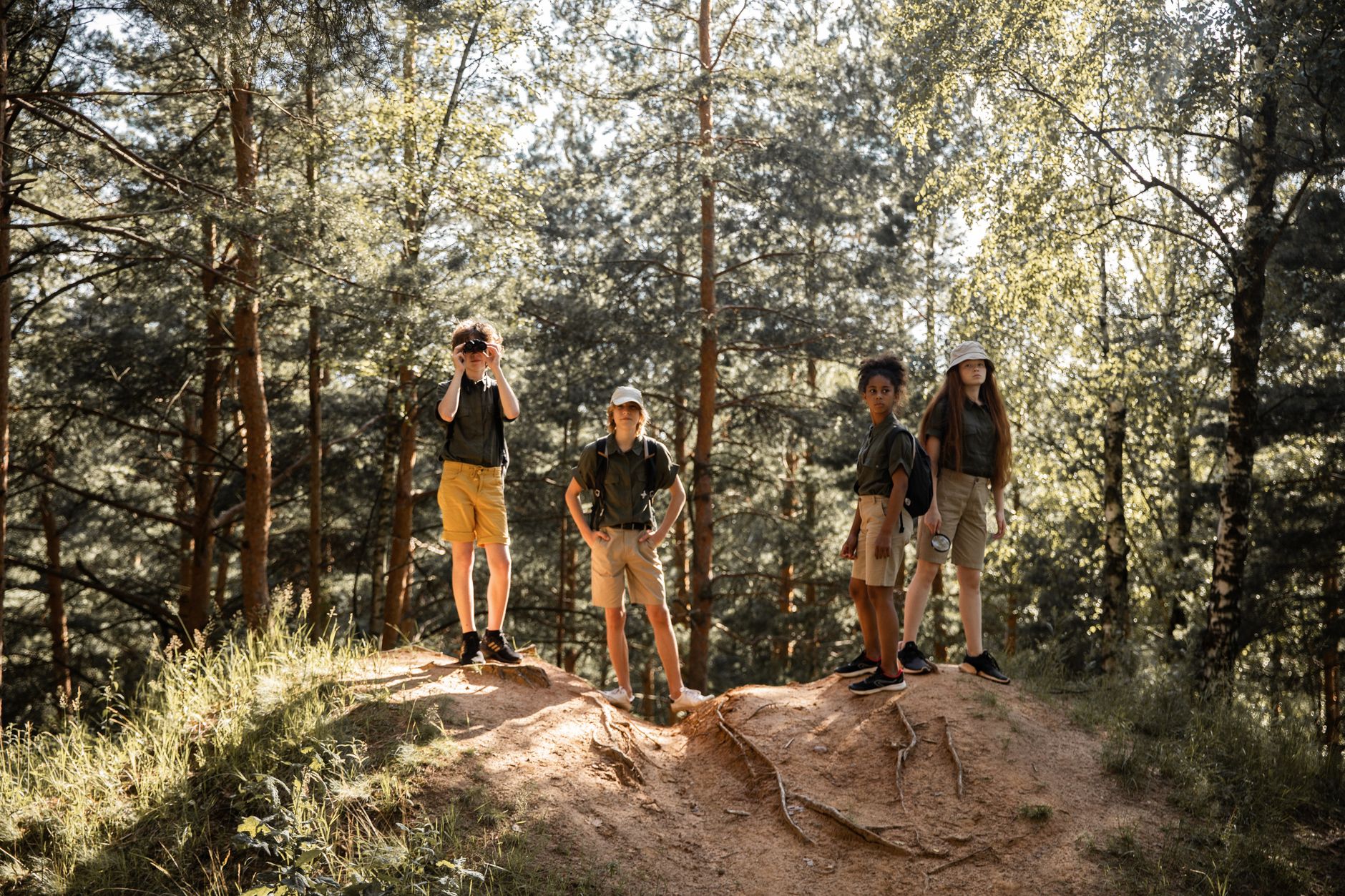 Photo by KATRIN BOLOVTSOVA
Hunt Sounds and Colours in Nature
Guide kids to slow down and tune in. Start with a short pause, 20 to 30 seconds, and listen like scientists. Then compare notes.
How to run a simple sound hunt:
- Find a safe spot, then say, “Close your eyes. Count three sounds.” Prompt ideas include a bird call, wind in leaves, distant car, or foot crunch on gravel.
- Name each sound with one word, then add a detail. Example: “Bird, high-pitched, from the pine tree.”
- Repeat on the next block and see what changes.
Add a colour hunt to keep eyes busy:
- Pick a colour family and spot shades as you walk. Try reds in October, like sumac leaves, mailbox flags, apples on a tree, or a hiker’s scarf.
- Shift to gold and rust for fallen leaves, dry grasses, and late flowers.
- Let big kids capture a quick photo, then compare tones later.
Why it calms minds:
- Focused listening slows breathing and lowers stress.
- Colour scanning builds attention and keeps steps steady.
- Labelling senses turns noise into a pattern, which helps kids feel in control.
Seasonal twists for October walks:
- Watch for spiderwebs with morning dew. Stand to the side and observe shape and sparkle without touching.
- Listen for migrating birds at dusk. Short chirps and flock calls carry well in cooler air.
- Spot leaf piles by colour and texture, then vote on the crunchiest path.
Collect Treasures for Home Crafts
Treasure collecting gives purpose to each step. Keep it safe and simple, and use only what you find on the ground.
Safe, easy-to-carry items:
- Fallen leaves in different shapes
- Small sticks and twigs
- Pinecones and seed pods
- Smooth pebbles
- Dried grasses and petals
- Bits of bark already shed
Skip anything sharp, wet, or alive. Avoid mushrooms and unknown seeds. If a park sign says “leave what you find,” collect photos instead.
Quick, low-cost projects at home:
- Leaf rubbings: place a leaf under paper and rub with a crayon.
- Nature collage: glue leaves, grasses, and bark to cardboard for a textured scene.
- Stick frames: tape or glue four twigs around a drawing or photo.
- Pebble patterns: make numbers, letters, or shapes on a tray, then take a picture.
- Pinecone pals: add paper eyes and a smile for simple characters.
- Window suncatchers: press petals and flat leaves on clear contact paper.
Why it boosts creativity:
- Hands-on work builds fine motor skills and planning.
- Kids learn to sort by size, shape, and color, which strengthens early math.
- Turning finds into art builds pride and memory of the walk.
Clean-up and care:
- Pack a small bag and a damp cloth for dirty hands.
- Sort and air-dry items before crafting.
- Reuse or compost leftovers when projects retire.
No products found.
Weave Stories as You Stroll
Story-building turns the trail into a stage. You start the scene, then pass the plot to your child, one short line at a time.
A simple format that keeps feet moving:
- Set the scene in one sentence. “On this path, a tiny explorer found a red leaf with secret writing.”
- Child adds a line, then you add a twist.
- Close after five to eight lines so the story lands with a fun ending.
How it builds language:
- Kids practice sequencing, cause and effect, and time words like before and after.
- New words stick when tied to real sights. Think ridge, rustle, cluster, crisp.
- Taking turns teaches listening and flexible thinking.
Prompts tied to what you see:
- “This yellow leaf is actually a map to the squirrel’s pantry.”
- “The wind sounds like a drum. Who is marching in the forest band?”
- “A spider spun a stage. Which tiny actors show up tonight?”
- “A cloud shaped like a dragon is late for school. Why?”
- “The pinecone is a suitcase. What goes inside for a trip?”
October story sparks:
- A brave acorn trains to become a mighty oak by spring.
- A flock holds a night meeting about their long flight south.
- A pumpkin on a porch hears three jokes and laughs so hard it wiggles.
Pro tips:
- Keep sentences short and active.
- Use names for places you pass, like the bend, the bridge, or the blue mailbox.
- End with a clear line, then start a fresh story at the next landmark.
Kids love when their ideas become part of family lore. Save a favourite line, jot it in your phone, and read it back at bedtime.
Smart Tips to Make Walks a Family Hit
Small tweaks turn a “meh” walk into a highlight of the day. Plan routes that fit attention spans, prep for the weather, and involve kids in choices. Add clear rewards and praise so motivation sticks. A few smart habits make walks repeatable, even on tired days.
 Photo by Barbara Olsen
Pick the Best Times and Paths
Short and sweet beats long and cranky. Aim for 15 to 30 minutes, then build up. Cool mornings or early evenings keep kids comfortable and focused. In 2025, families favor nature-rich spots and inclusive parks with easy loops, shade, and rest areas.
Smart route ideas:
- Start at a park, finish at a playground bench.
- Use a loop near home so you can bail early if needed.
- Pick one “anchor” stop, like a duck pond or mural, to create momentum.
Prep for weather like a pro:
- Check forecast, heat index, and air quality before you go.
- Dress in light layers, hats, and moisture-wicking socks.
- Pack water, a mini first aid kit, sunscreen, and a light rain shell.
- Use sturdy shoes or closed-toe sandals for mixed paths.
Quick fixes for tired feet:
- Switch to “landmark sprints,” walk briskly to the next mailbox.
- Offer a 60-second sip-and-stand break, not a full sit-down.
- Let kids choose the final block or the coolest shortcut.
Involve Everyone and Add Rewards
Kids walk longer when they feel ownership. Let them pick the route name, the playlist, or the first game. A buddy system helps, too. Siblings pair up, or invite a neighbor friend for a social boost.
Simple ways to include all ages:
- Assign roles: leader, timekeeper, photographer, safety scout.
- Rotate roles every block to keep interest high.
- Use “choice coins” at the start, each child spends one to pick a game.
End with small rewards that feel special, not sugary:
- Choose the next family game or the audiobook for bedtime.
- Add a sticker to a walk chart and unlock a weekend pick at five stickers.
- Enjoy a fruit pop or cold slice of watermelon on hot days.
Praise is your best fuel:
- Use clear, specific praise like “Great scanning ahead at the crosswalk.”
- Celebrate effort, not speed, to keep confidence high.
- Mark one “win” per kid, such as leading a safe street crossing.
No products found.
Mix It Up to Beat Boredom
Variety keeps the spark alive. Rotate games, change scenery, and blend wheels with feet. Scooters or bikes for older kids can pace with a parent on foot. Set rules like ride to the next corner, then wait.
Easy ways to refresh the routine:
- Theme days: colour hunt Monday, story walk Wednesday, bingo Friday.
- Micro-challenges: 100 quiet steps, 10 curb balances, 8 speed paces.
- Bring one prop, like a magnifier or a small nature guide.
Track progress to make habits visible:
- Keep a simple walk journal with date, route, and one memory.
- Use a wall calendar for checkmarks and short notes.
- Snap a “finish-line” photo at the same spot each week.
Tie it to health that lasts:
- Short daily movement builds stamina, mood, and sleep quality.
- Kids learn to self-pace, hydrate, and read weather cues.
- Consistent wins turn walking into a family norm, not a chore.
Quick motto to repeat: start short, switch it up, finish proud.
Safety Tips when walking on the trail
Walking with kids should feel relaxed and fun, and safety makes that possible. A few clear rules, simple habits, and the right gear keep everyone focused on the adventure. Use these tips before you head out and while you are on the trail so play and peace can live side by side.
 Photo by Tatiana Syrikova
Set Clear Rules Kids Remember
Kids respond to simple, consistent rules. Say them out loud before the first step and repeat at junctions.
- “Eyes on grownups” rule: kids stay where an adult can see them at all times.
- Stop at every junction: no turns until the group agrees.
- Buddy system: younger kids pair with an adult or older sibling.
- Trail etiquette: stay right, pass politely, yield to uphill hikers, and give space to dogs.
- Hands to self: look with eyes, do not pick plants or touch wildlife.
- Slow on hazards: walk, do not run, on rocks, roots, mud, or near edges.
Quick script for kids:
- “Feet on the path, eyes forward, wait at signs, whistle if worried.”
Gear Up for Comfort and Safety
A light setup keeps kids moving and prevents avoidable problems.
- Shoes: closed-toe, grippy soles, and socks that do not slip.
- Clothing: bright layers, a hat, and a light rain shell packed flat.
- Water and snacks: one small bottle per kid, easy carbs plus salty bites.
- Sun and bug care: sunscreen, lip balm, and repellent. Learn the look of poison ivy or oak where you live.
- First aid basics: bandages, antiseptic wipes, tweezers, blister pads, and a few kid-safe meds.
- Visibility: bright shirts or small reflective bands for low light.
- Kid kit: mini whistle, small flashlight or headlamp, bandana, and a snack they can open.
Tick check after the walk:
- Brush off clothing, check hairline, behind ears, armpits, waistband, and socks. Shower and recheck.
Stay Oriented and Connected
Good navigation prevents stress and keeps the group calm.
- Study the route together: show kids the trail name, color, and key landmarks.
- Download offline maps and take a photo of the trailhead map.
- Set meeting points: “If we get separated, we meet back at the big bridge.”
- Pace with checkpoints: pause at mile markers, benches, or creek crossings to regroup.
- Batteries matter: start with a charged phone and one portable charger.
Smart boundary cues for kids:
- “You can go tree-to-tree ahead of us, not around corners.”
Watch Water, Wildlife, and Weather
Nature is the draw, and it demands respect.
- Water safety: keep kids close near rivers, edges, and slick rocks. Skip fast currents and wet logs.
- Wildlife space: observe from a distance, secure food, and never feed animals.
- Plants and fungi: admire mushrooms and unknown berries with your eyes only.
- Heat and cold: use shade breaks, sip often, and watch for flushed faces or chills.
- Storm calls: turn back if thunder rumbles or winds rise. Trails will be there tomorrow.
Simple checks while walking:
- Look at the sky every 15 minutes.
- Ask for a water sip at each landmark.
- Feel hands and noses for cold or heat.
Manage Pace, Breaks, and Fatigue
Steady beats sprinting. Keep spirits high with short, planned rests.
- Start easy: 15 to 30 minutes for young kids, then build.
- Micro-breaks: 60 seconds standing, sip, and shake out arms. Do not sit long unless someone is unwell.
- Snack timing: small bites every 30 to 45 minutes.
- Rotate leaders: kids take turns setting a safe, steady pace.
- Red flag signs: tripping more than once, getting very quiet, or tugging at clothes. Slow down or turn back.
Motivation that supports safety:
- “Landmark sprints” to the next sign, then regroup.
- Choice rewards at the end, like picking the next game.
No products found.
What to Do if You Get Separated
Teach a simple plan and practice it before you go.
- Stay put: kids stop where they are and make themselves easy to see.
- Whistle rule: three loud blasts, pause, repeat.
- Make a space: find a visible spot away from water, cliffs, or thick brush.
- Warmth: use a jacket or bandana, and snack while waiting.
- Adults backtrack: one adult searches back on the trail, the rest stay with the group.
Quick reference for kids:
- “Hug a tree, blow your whistle, wait for me.”
Safety signals at a glance:
| Signal | Meaning |
|---|---|
| Three whistle blasts | I need help |
| Two whistle blasts | Where are you? (adult call) |
| One whistle blast | I am here (child response) |
| Arm up and still | Stop and come to me |
Example practice line:
- “If you cannot see me, stop, whistle, and I will come to you.”
A Short Pre-Walk Checklist
Use this 60-second scan at the trailhead.
- Route confirmed, offline map ready, return time set.
- Weather checked, layers packed, sunscreen on.
- Water, snacks, first aid, and a charged phone.
- Whistles and roles assigned, kids repeat rules back.
- Meeting point chosen if anyone gets separated.
Strong safety habits make space for fun. When kids know the plan, they explore with confidence and you relax into the walk.
Conclusion
Walking becomes a habit when it feels like play. Scavenger hunts, I Spy, Follow the Leader, and Nature Bingo turn each block into a win. Sound and colour hunts focus busy minds, while stories and simple crafts keep the magic going after you get home. Smart routes, light rewards, and clear roles keep momentum steady, and safety habits make space for calm fun.
Start small tonight. Try a colour hunt to the next corner, or rotate leaders for one block. Keep it short, praise effort, and end on a high note. Tomorrow, swap in a new game or a quick photo prompt. Consistent, playful steps build stamina, spark curiosity, and strengthen family bonds.
Thanks for reading. Try one tip this week, then report back. Share your favourite game, a quick win, or a challenge in the comments so other families can learn from you.